What Water Meter Sizes Actually Mean
In water metering, "size" usually means nominal diameter, or DN. DN is a rounded designation for the meter body and connection. It is not the exact inside diameter of the pipe, and it does not automatically mean the meter can handle every flow that pipe can carry.
Flow capacity is described using ISO 4064 terms. Q1 is minimum flow, Q2 is transitional flow, Q3 is permanent flow, and Q4 is overload flow. Q3 is the key number for most sizing decisions: the highest flow at which the meter is designed to operate continuously within its metrological limits. Q4 is a short-term overload, not a normal operating target.
Water meter sizes therefore involve two checks: connection size (DN) and flow rating (Q3).
How to Match Meter Size to Pipe and Flow (Q3)
Start with the flow profile, not the pipe label. Estimate the maximum sustained flow the meter will see, then compare it with the meter's Q3. As a general rule, expected peak sustained flow should sit at or below Q3. Short peaks may be compared with Q4, but the meter should not run at overload continuously.
Next, check pressure loss. Smaller meters create higher velocity and greater pressure loss at the same flow. If upstream pressure is low, a meter within its flow range may still cause weak supply. Larger meters reduce pressure loss but can harm low-flow accuracy.
- Confirm actual pipe DN and connection standard at the installation point.
- Compare normal, peak, and minimum flows against Q3, Q1, and the meter datasheet.
- Review pressure loss at expected peak flow, not only average flow.
- Check installation orientation, straight-pipe needs, and maintenance access.
- Verify local metrology approval rules before finalizing size.
Reducers or flanges may allow a smaller meter on a larger line where low flows must be measured accurately and pressure loss is not critical. A large meter on a small line rarely makes sense.
DN Sizing Logic for Common Applications
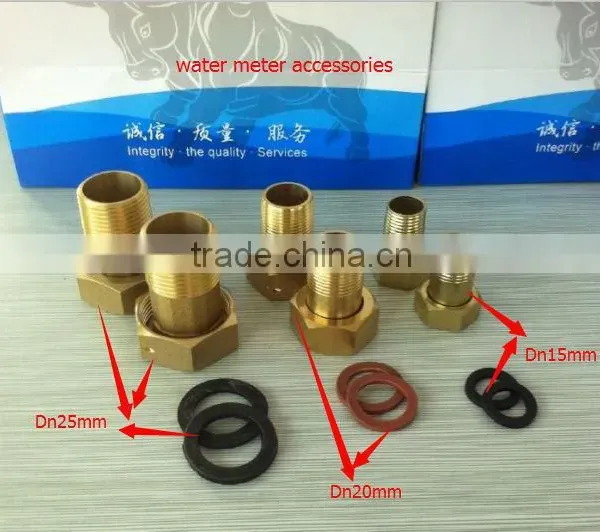
DN sizing follows the application. For individual service connections and small residential branches, DN15 to DN25 meters are common. For small commercial premises and light industrial lines, DN32 to DN50 meters are often considered. Larger mains and industrial processes typically move into DN50 and above, where high sustained flow and lower pressure loss become priorities.
For large industrial lines, Woltmann-style meters are often used because they handle higher flow with relatively low pressure loss. Gaoxiang Water Meter offers the LXLC-250E Woltmann removable-element dry-type industrial water meter in DN50-300mm. The company also offers the LXSG-15E-50E large-diameter flange mechanical water meter and the LXS15-300 pulse-output water meter with 1/10/100 Liter/Pulse output.
Do not size by pipe alone
A DN100 pipe does not automatically require a DN100 meter. If actual sustained flow is low, a smaller meter with reducers may measure more accurately. Conversely, a DN50 pipe may need a larger meter if flow is high and pressure loss must stay low.
Oversizing and Undersizing Pitfalls
Oversizing is a common error. A meter that is too large may operate below its accurate low-flow range for much of the day. Leaks, small draw-offs, and night-time flows can go under-registered, reducing revenue and hiding system losses. Oversized meters also cost more and may need larger fittings.
Undersizing creates the opposite problem. A meter too small for peak demand can cause excessive pressure loss, noise, and accelerated wear. High velocity can shorten component life and increase maintenance frequency. In extreme cases, flows near or above Q4 can damage the meter.
- Oversized meter: poor low-flow accuracy, higher cost, larger footprint.
- Undersized meter: high pressure loss, wear, noise, possible flow interruption.
- Correct size: normal flows inside the measuring range, acceptable pressure loss, suitable connection.
Checklist Before Ordering Water Meters
Before requesting a quotation, gather the data your supplier needs.
- Pipe DN and connection type at the meter position.
- Minimum, normal, and maximum sustained flow rates.
- Available upstream pressure and acceptable pressure loss.
- Water temperature and installation environment.
- Local metrology approval and testing requirements.
- Reading method: local, pulse output, or remote reading.
- Required quantity and delivery destination.
Gaoxiang Water Meter Co., Ltd. is a manufacturer and trading company founded in 2005. Its main products include water meters, heat meters, prepaid water meters, and ultrasonic meters. According to the company's official profile, its water meters hold ISO4064 regulation approval certificates, and the company's official profile states ISO9001:2008 certification and complies with National Regulations for testing and metrology calibration. For export orders, MOQ is 100 pcs for most products, with prices negotiable.
Reading a Data Sheet Before You Size
A data sheet gives you the numbers your flow profile must be checked against. Read these fields before you ask anyone to confirm a size.
- Q3 permanent flow: the highest flow the meter handles continuously. Your peak system flow should sit at or below it.
- Q1 low-flow end: the lowest flow at which the meter must stay within its maximum permissible error. Below Q1 the meter may still register, but accuracy is no longer guaranteed — if your minimum demand regularly falls below Q1, low-flow consumption may be under-recorded.
- Pressure loss at your peak flow: check the head loss figure at your expected peak, not your average. A meter sized on average flow can throttle the system at maximum demand.
- Maximum working pressure and temperature class: match both to your line conditions, including any peaks or hot-water duty.
- Installation orientation: horizontal and vertical mounting are not interchangeable on every meter.
- Body and connection standard: confirm flange or thread standard, face-to-face length, and end connections match your pipework.
- Metrology approval references: look for ISO 4064 family references and the specific approval body. According to Gaoxiang's official company profile, its water meters hold ISO4064 regulation approval certificates.
We do not claim US drinking-water certifications (such as NSF) for any model.
Before contacting a supplier, put these fields in a small table beside your flow profile: minimum, normal, and peak flow, pressure, temperature, and pipe size. Then ask them to confirm the size against that table.