What Makes Commercial Water Meter Projects Different?
Residential metering is usually one meter per dwelling with a stable flow profile. Commercial water meter projects vary widely. A mall may have a large incoming line and many tenant branches. A hotel adds guest rooms, laundry, kitchens, pools, and hot water loops. A mixed-use building combines retail, offices, apartments, and shared mechanical systems.
Four factors drive selection:
- Flow range: Main meters must handle low overnight flows and high daytime peaks. Branch meters may see very different profiles.
- Pipe size and layout: Large incoming lines often need flanged, large-diameter meters; branches may use smaller threaded or flanged connections.
- Metering purpose: Main meters support utility billing or benchmarking. Branch meters support cost allocation, leak detection, or tenant recovery.
- Access and environment: Vaults, mechanical rooms, ceiling spaces, and outdoor pits influence whether a dry-dial, smart, pulse-output, or prepaid meter is practical.
Start with the water balance and piping schematic, not a single model number.
Main Incoming Commercial Water Meter Selection
The main incoming commercial water meter is the building’s primary measurement point. It should match service line size, peak flow, normal flow, and minimum flow. Undersizing creates pressure loss and wear. Oversizing can miss low-flow events and produce poor turndown.
Use the utility service size and plumbing engineer’s demand calculations as the baseline. Common hardware paths include:
- Large-diameter mechanical meters: Catalog examples include the Large-Diameter Flange Mechanical Water Meter LXSG-15E-50E and the Woltmann Removable Element Dry Type Industrial Water Meter LXLC-250E, DN50-300mm. Woltman-style meters are often used where high, relatively stable flows are expected.
- Ultrasonic meters: Gaoxiang offers ultrasonic water meters. These are often considered when low-flow accuracy, no moving parts, or electronic output is important. Confirm the actual model, pressure rating, and communication interface with the sales team.
- Multiple-meter arrangements: Some buildings use two meters to cover a very wide flow range. That is an engineering decision, not a standard catalog package.
Review ISO 4064 general industry values: Q1 minimum flow, Q2 transitional flow, Q3 permanent flow, and Q4 overload flow. Do not size only by pipe diameter. A commercial water meter that matches the pipe but not the flow profile can under-read or over-read. See this guide to water meter sizes.
Branch and Tenant-Level Metering Hardware
Branch and tenant-level metering is where commercial water meter projects become complex. You may need to measure water for tenants, restrooms, kitchens, laundry, irrigation, cooling tower makeup, or shared amenities. The goal is usually cost allocation, leak detection, or landlord recovery. Gaoxiang supplies hardware; it does not provide submetering billing services.
Catalog options include:
- Mechanical meters: Single-jet, multi-jet, Woltman, and piston/volumetric meters, including the Positive Displacement Water Meter Brass Body.
- Prepaid IC and RF card meters: IC and RF card prepaid meters with valve control for card-based tenant supply. IC/RF cards have MOQ 100 pcs.
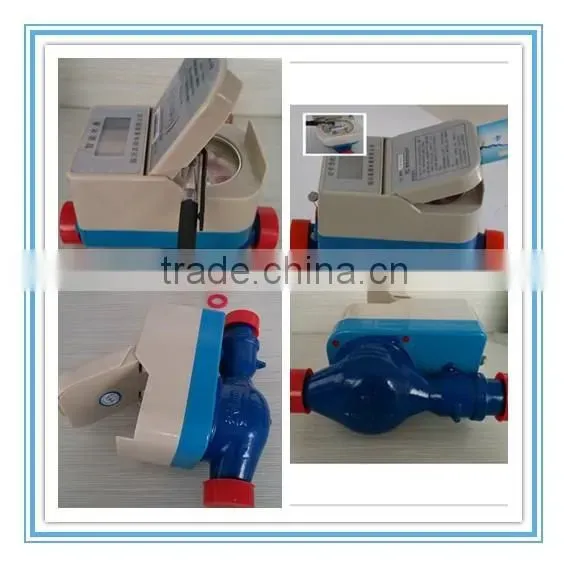
- Smart water meters: Electronic-register models, including Indoor Smart Water Meter, for local reading. Confirm with the sales team which interfaces or communication options a specific model supports before planning system integration.
- Accessories: Brass connectors/couplings, brass check valves (MOQ 500 pcs), and plastic strainers (MOQ 5,000 pcs).
Decide early whether meters will be read visually, by pulse, or over a network. Confirm valve needs, access, and whether the piping allows a full-bore or reduced-bore installation. Review mechanical water meters if you need a simple, serviceable branch solution.
Reading Systems for Facility Managers
Reading systems should match the facility manager’s workflow. Some properties need monthly visual reads. Others need daily interval data, tenant portals, leak alerts, or BMS integration. In general industry knowledge, AMR means automated meter reading, while AMI usually means advanced metering infrastructure with two-way communication and more data.
Gaoxiang’s catalog includes pulse-output and electronic-register hardware, but system architecture depends on your BMS, network, and software. Common hardware paths are compared below.
| Reading path | Hardware option | Best fit | Verify |
|---|---|---|---|
| Manual visual | Mechanical meters: single-jet, multi-jet, Woltman, positive displacement | Small branches, low tenant count | Access, location, read frequency |
| Pulse output | Pulse Transmitting Pulse Output Water Meter LXS15-300, 1/10/100 Liter/Pulse | Existing BMS or data logger | Pulse value, wiring, controller compatibility |
| Electronic register | Smart water meters with electronic register, including Indoor Smart Water Meter | Tenant monitoring with difficult access | Communication method, battery, network |
| Prepaid card control | IC and RF card prepaid meters with valve control; IC/RF cards (MOQ 100 pcs) | Landlord-controlled recovery | Valve control, card system, local policy |
For networked reads, common industry protocols include M-Bus, LoRaWAN, NB-IoT, and other wired or wireless options. Gaoxiang does not provide the billing or utility operations layer. Confirm meter output compatibility before ordering. See remote-reading water meters.
Hot Water and Heating Branches
Hotels, large offices, and mixed-use properties often have significant hot water and heating loads. These branches may need heat meters rather than cold water meters. Heat metering combines flow and temperature difference to calculate energy. If the building allocates heating or hot water costs, hardware must match local billing rules and system design.
Gaoxiang’s catalog includes heat meters in mechanical, vertical, ultrasonic, and RF card intelligent versions with valve control. When specifying, verify flow rate, pipe size, supply and return temperatures, valve needs, reading output, and local approval rules. Do not treat a heat meter as a simple substitute for a water meter. Sensor placement, temperature probes, and calculation method matter.
Retrofit vs New Build
New construction lets the plumbing engineer set space, straight pipe runs, and meter locations before walls close. Retrofit projects are driven by existing pipe sizes, limited access, old valves, and occupied tenant spaces.
New build priorities: coordinate meter locations with accessible mechanical rooms; confirm straight-pipe requirements; decide reading architecture before rough-in; leave space for strainers, check valves, and isolation valves.
Retrofit priorities: measure actual pipe outside diameter and thread or flange type; confirm upstream and downstream straight pipe; choose a meter that fits existing access; plan temporary shutdown or bypass; verify output compatibility with the existing BMS or data logger.
In occupied buildings, a remote-reading or pulse-output commercial water meter can reduce staff entry into tenant spaces. Gaoxiang supplies hardware only; installation and repair are handled by local contractors.
RFQ Checklist for Commercial Water Meter Projects
A clear RFQ helps the manufacturer quote the right commercial water meter hardware. Include:
- Application point: main, tenant branch, restroom, kitchen, irrigation, cooling tower makeup, hot water, or heating.
- Fluid: cold water, hot water, or heating water.
- Pipe size and connection: DN or inch size, thread or flange, pressure rating.
- Flow data: normal, peak, minimum flow, and expected daily volume.
- Meter type: mechanical, positive displacement, ultrasonic, smart electronic, prepaid IC/RF, pulse output, or heat meter.
- Reading method: visual, pulse, M-Bus, wireless, or BMS integration.
- Valve requirement: none, manual isolation, or valve control for prepaid/remote shutoff.
- Environment: indoor, outdoor, pit, vault, wet, or humid.
- Quantity and MOQ: standard 100 pcs for most meters and IC/RF cards; brass check valves 500 pcs; plastic strainers 5,000 pcs.
- Approvals: state local requirements. Gaoxiang states all water meters hold ISO 4064 regulation approval certificates, is ISO 9001:2008 certified, and complies with National Regulations for testing and metrology calibration.
- Commercial terms: prices are negotiable; confirm lead time with the sales team.
Gaoxiang does not provide installation, repair, submetering billing, utility operations, TDS instruments, or industrial flowmeters. The scope is water meter and accessory supply.
Send Your Commercial Water Meter Specification to Gaoxiang
Send your meter list, pipe sizes, flow data, reading requirements, and quantity to the manufacturer. Gaoxiang Water Meter was founded in 2005 and serves China, Western Europe, Southeast Asia, South America, North America, and Africa. For quotes and model confirmation, contact Mrs. Aileen Shao, Sales manager, at +86-539-8121218 or [email protected]. You can also use the contact page to send your specification. Include local approval requirements and whether you need main meters, branch meters, heat meters, reading hardware, or accessories.
Frequently asked questions
Are Gaoxiang meters NSF certified or lead-free?
Gaoxiang does not claim NSF certification, lead-free status, potable-water approval, or US drinking-water approval for any model. The company states all water meters hold ISO 4064 regulation approval certificates, is ISO 9001:2008 certified, and complies with National Regulations for testing and metrology calibration. US buyers must verify local code and utility approval separately.
Can Gaoxiang provide submetering billing or installation?
No. Gaoxiang supplies water meters, heat meters, reading-related hardware, and accessories only. It does not provide installation, repair, submetering billing, utility operations, TDS instruments, or industrial flowmeters. Local contractors and software providers handle those services. Gaoxiang can quote hardware for main, branch, tenant, hot water, and heating points.
What is the MOQ for commercial water meter orders?
The standard MOQ is 100 pcs for most meters and IC/RF cards. Brass check valves have an MOQ of 500 pcs, and plastic strainers have an MOQ of 5,000 pcs. Prices are negotiable, and lead time should be confirmed with the sales team based on models, quantities, and accessories.
Can I mix pulse, M-Bus, and wireless meters in one building?
In general industry practice, yes, but the reading system must support each output. Pulse, M-Bus, LoRaWAN, NB-IoT, and other protocols may require gateways, controllers, or software. Gaoxiang supplies pulse-output and electronic-register hardware but does not provide the billing layer. Confirm output, wiring, and protocol compatibility with your BMS or reading vendor before ordering.